Providence, RI – December 14, 2025 – In a horrifying escalation of campus violence, a Brown University shooting claimed the lives of two students and left eight others in critical condition late Saturday afternoon. The incident, which unfolded in the heart of the Ivy League institution’s engineering complex during final exams, has plunged the Brown University community into mourning and lockdown, with the suspect—a male dressed in all black—still at large more than 12 hours later.
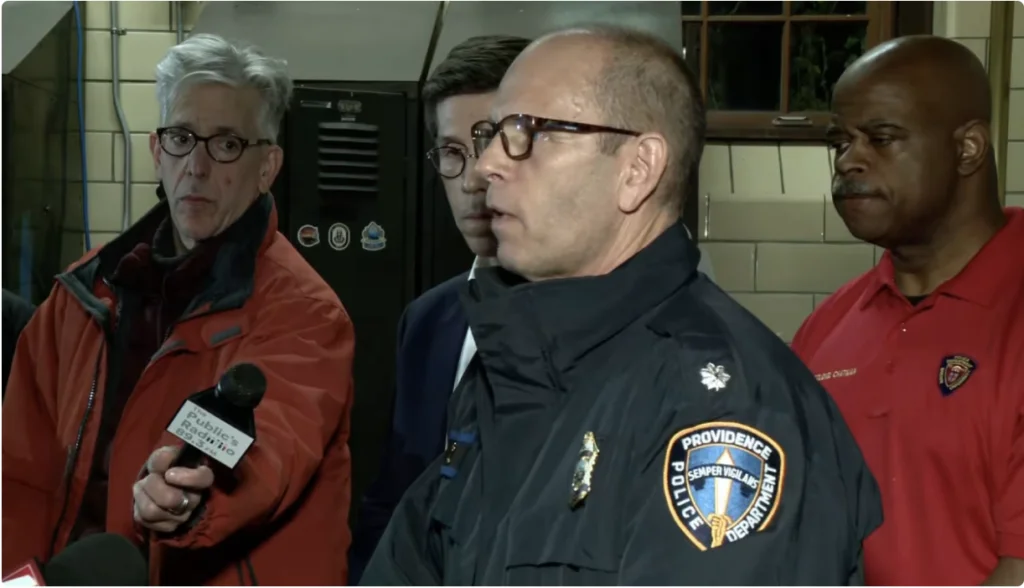
Providence Deputy Chief of Police Tim O’Hara speaks at a press conference in Providence, Rhode Island, on Saturday. WJAR, Courtesy: CNN
Eyewitnesses described scenes of chaos as gunfire erupted around 3:45 p.m. in the Barus & Holley engineering building, a hub for STEM students cramming for end-of-semester tests. “I heard multiple gunshots, like fireworks but sharper,” recounted Brown University junior Katie Sun, who was studying in a nearby lounge before sprinting to her dorm. The Brown University shooting has since prompted a massive manhunt involving local police, the FBI, and ATF agents, but authorities admit they lack key details, including surveillance footage of the gunman or how he accessed the secured facility.
Timeline of the Brown University Shooting: From First Shots to Ongoing Lockdown
The Brown University shooting began abruptly on December 13, 2025, the second day of finals at the historic Providence campus. According to preliminary reports, the lone gunman entered the engineering building undetected and opened fire on a group of approximately 15 students gathered for a study session. Bullets tore through the quiet academic space, striking victims aged 19 to 24, including international scholars and local Rhode Islanders.
By 4:15 p.m., Providence Police had issued an active shooter alert, ordering a campus-wide shelter-in-place. Students barricaded themselves in closets and lecture halls, while heavily armed officers swept buildings block by block. A false report of a secondary Brown University shooting near the main quad briefly heightened fears, but it was quickly debunked as unfounded.
As night fell, the grim toll emerged: two unidentified victims pronounced dead at Rhode Island Hospital from multiple gunshot wounds, and eight more undergoing emergency surgery for life-threatening injuries. No motive has been established, though officials described the attack as “targeted but random” within the building. The suspect, estimated to be in his 30s with a medium build, fled on foot toward nearby Benefit Street, evading capture despite K-9 units and drone surveillance.
Brown University President Christina Paxson addressed the nation in a tearful 10 p.m. press conference alongside Providence Mayor Brett Smiley. “This Brown University shooting has shattered our sense of safety,” Paxson said, her voice breaking. “We are heartbroken for the families, but our resolve to heal and protect our community is unbreakable.” Smiley echoed the sentiment, vowing, “We will not rest until this coward is behind bars.”
Student Voices Amid the Brown University Shooting Aftermath
The Brown University shooting has elicited raw accounts from survivors, painting a vivid picture of terror amid academia. Freshman engineering major Alex Rivera, 18, hid under a desk for 45 minutes, whispering prayers into his phone to his mother in California. “Exams felt like the biggest stress until today,” Rivera told reporters from his dorm window, the campus still shrouded in eerie silence under lockdown. “Now, it’s about survival.”
Social media exploded with footage from the scene: videos of students fleeing in panic, police marching down snow-dusted streets with rifles drawn, and helicopters circling overhead. One viral clip, shared widely on X (formerly Twitter), shows a group of undergraduates sprinting across the quad, textbooks abandoned in their wake. “Police are still sweeping—shooter at large after 5+ hours,” posted user @Margari27578631, capturing the mounting anxiety.
International students, who make up nearly 25% of Brown’s 7,000 undergraduates, expressed particular anguish. “I came here for knowledge, not this,” said a teary-eyed exchange student from India, speaking anonymously due to visa concerns. Counseling services have been overwhelmed, with the university extending finals deadlines and offering virtual therapy sessions for those too traumatized to leave their rooms.
Official Response and Political Echoes of the Brown University Shooting
Law enforcement’s handling of the Brown University shooting has drawn scrutiny. Providence PD Chief Michael J. Sullivan admitted during updates that no video evidence captured the gunman’s face, and the weapon—a semi-automatic handgun, per ballistics—remains unrecovered. “We don’t know his entry point or escape route yet,” Sullivan stated, fueling speculation about campus security lapses. Brown, a designated gun-free zone, prohibits firearms for students and staff, a policy reaffirmed in the briefing.
The incident has reignited national debates on gun control, especially as it marks the latest in a string of campus tragedies. President Donald Trump, briefed on the Brown University shooting, called it “a terrible thing and a shame” in a late-evening statement from Mar-a-Lago. “My heart goes out to the great people of Brown—thoughts and prayers,” he added, drawing immediate backlash from gun reform advocates who decried the response as insufficient.
On X, reactions poured in: conservative voices speculated on the shooter’s identity, with one user wagering it involved a “trans shooter,” while progressives like @mmpadellan demanded immediate action. “Two dead, eight critical from the senseless mass shooting at Brown University. Gun reform NOW!” the post read, amassing thousands of likes.
Federal resources have surged to the scene, with the FBI’s Behavioral Analysis Unit profiling potential leads. A $50,000 reward for information leading to an arrest was announced by the mayor’s office, and tips can be submitted anonymously via the Providence PD hotline.
Broader Implications: Safety, Grief, and the Future After the Brown University Shooting
As dawn breaks on December 14, the Brown University shooting continues to dominate headlines, with classes canceled through the holidays and a virtual vigil planned for 7 p.m. tonight. The engineering building, a symbol of innovation, now stands cordoned off with yellow tape fluttering in the winter wind—a stark reminder of vulnerability in higher education.
Experts warn that the Brown University shooting could exacerbate mental health crises among students already strained by post-pandemic pressures and economic woes. “Campuses like Brown are sanctuaries, not war zones,” said Dr. Elena Vasquez, a trauma psychologist at Harvard. “Recovery will take years, but community bonds can be the first step.”
For now, Providence’s tight-knit neighborhoods rally around Brown. Local businesses have donated meals to first responders, and alumni worldwide have pledged over $1 million to a victim fund launched hours after the Brown University shooting. “We’re Bears—we endure,” reads a GoFundMe banner, invoking the school’s mascot.
Updates on the manhunt will be provided as they emerge. In the face of this Brown University shooting, one thing is clear: a prestigious institution’s pursuit of knowledge has been forever scarred, but its spirit remains unbroken.
This article will be updated with new developments. For more on campus safety and gun violence prevention, visit NPR’s coverage or Reuters’ live tracker. Sources include official statements from Brown University and Providence authorities.