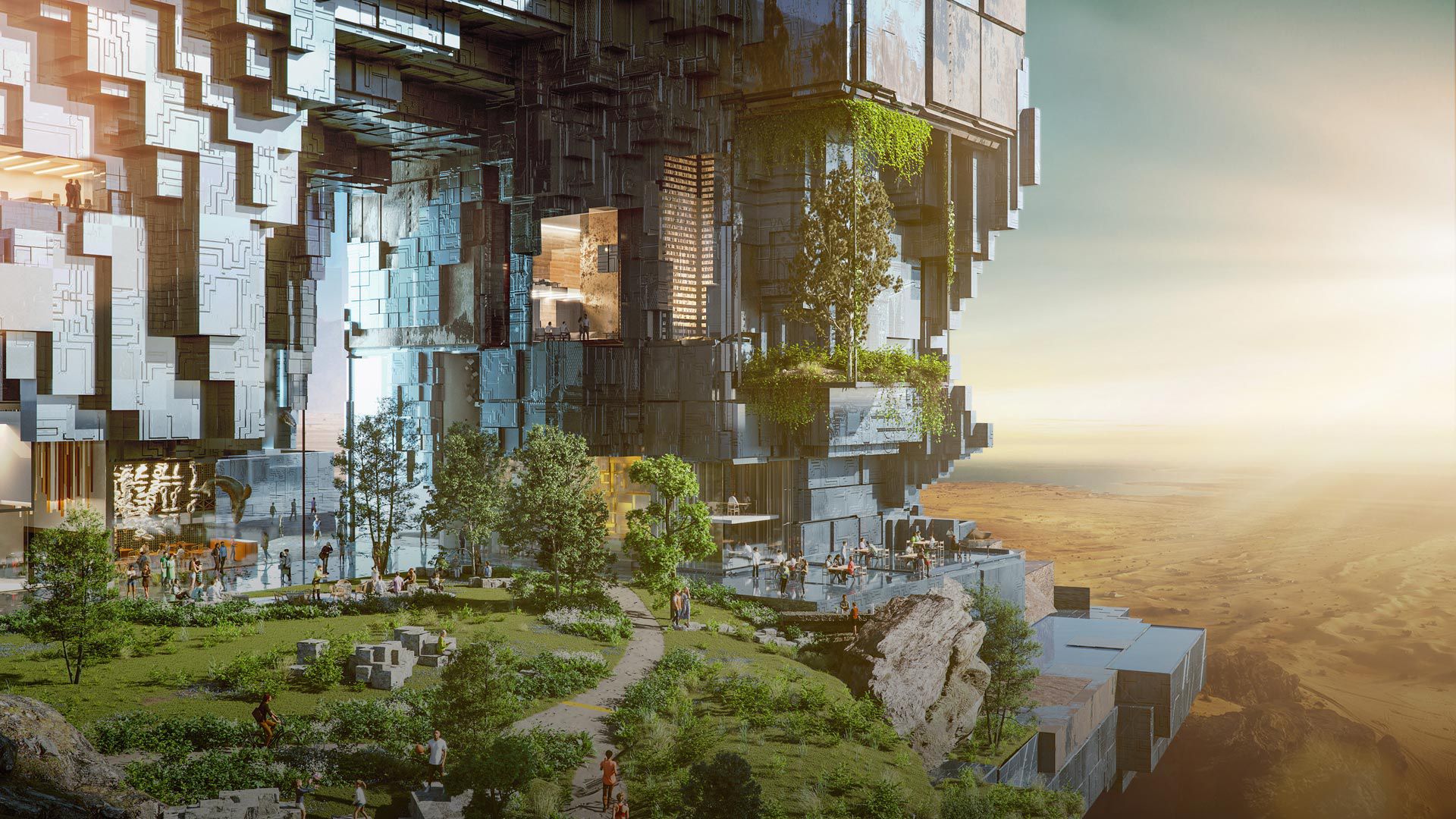
The Line, the centerpiece of Saudi Arabia’s ambitious NEOM megaproject, continues to captivate the world as one of the boldest urban experiments in history. Envisioned as a 170-kilometer-long, car-free, zero-carbon linear city housed in two parallel mirrored skyscrapers, The Line promises to revolutionize how we live, work, and interact with nature. But as 2025 ends, the project has undergone significant scaling back due to financial realities, engineering hurdles, and shifting priorities under Vision 2030.
The Grand Vision: Redefining Urban Living
Announced in 2021 by Crown Prince Mohammed bin Salman (MBS), The Line was designed to address global urban challenges like congestion, pollution, and inefficiency. Key elements of the original plan:
- Structure: Two 500-meter-tall, 200-meter-wide mirrored buildings running 170 km from the Red Sea coast through deserts and mountains.
- Sustainability: 100% renewable energy, no cars (high-speed rail and hyperloops instead), vertical farming, and AI-optimized systems.
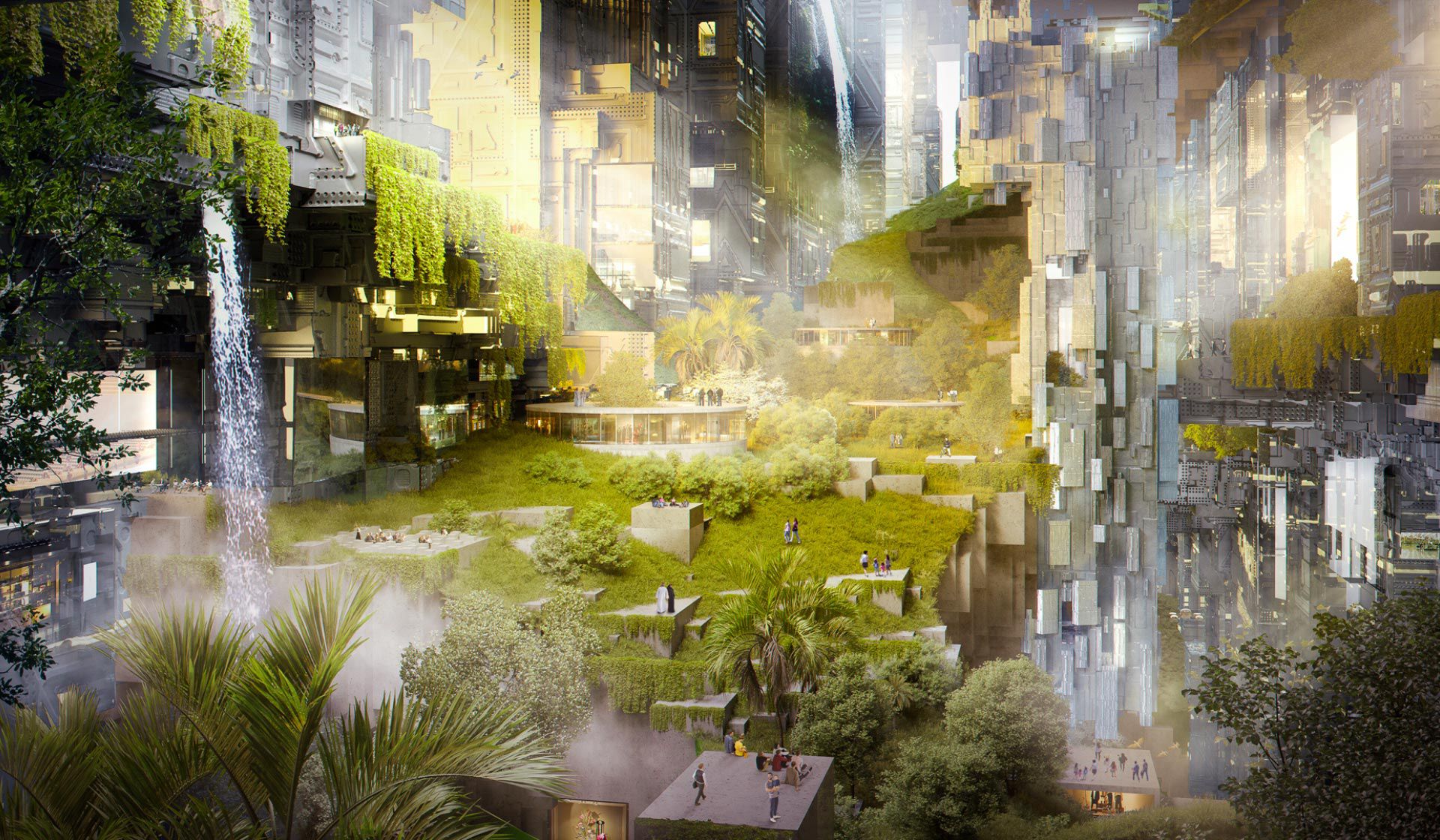
- Livability: All daily needs within a 5-minute walk, layered communities with parks, schools, and amenities stacked vertically.
- Scale: Initially planned to house 9 million residents, preserving 95% of surrounding nature.
- Goal: A “cognitive city” where technology enhances human life, part of NEOM’s broader $500 billion+ ecosystem.
The project symbolized Saudi Arabia’s push to diversify beyond oil, attracting global attention with stunning renders of green oases amid mirrored walls.

Construction Progress in 2025: From Excavation to Reality Checks
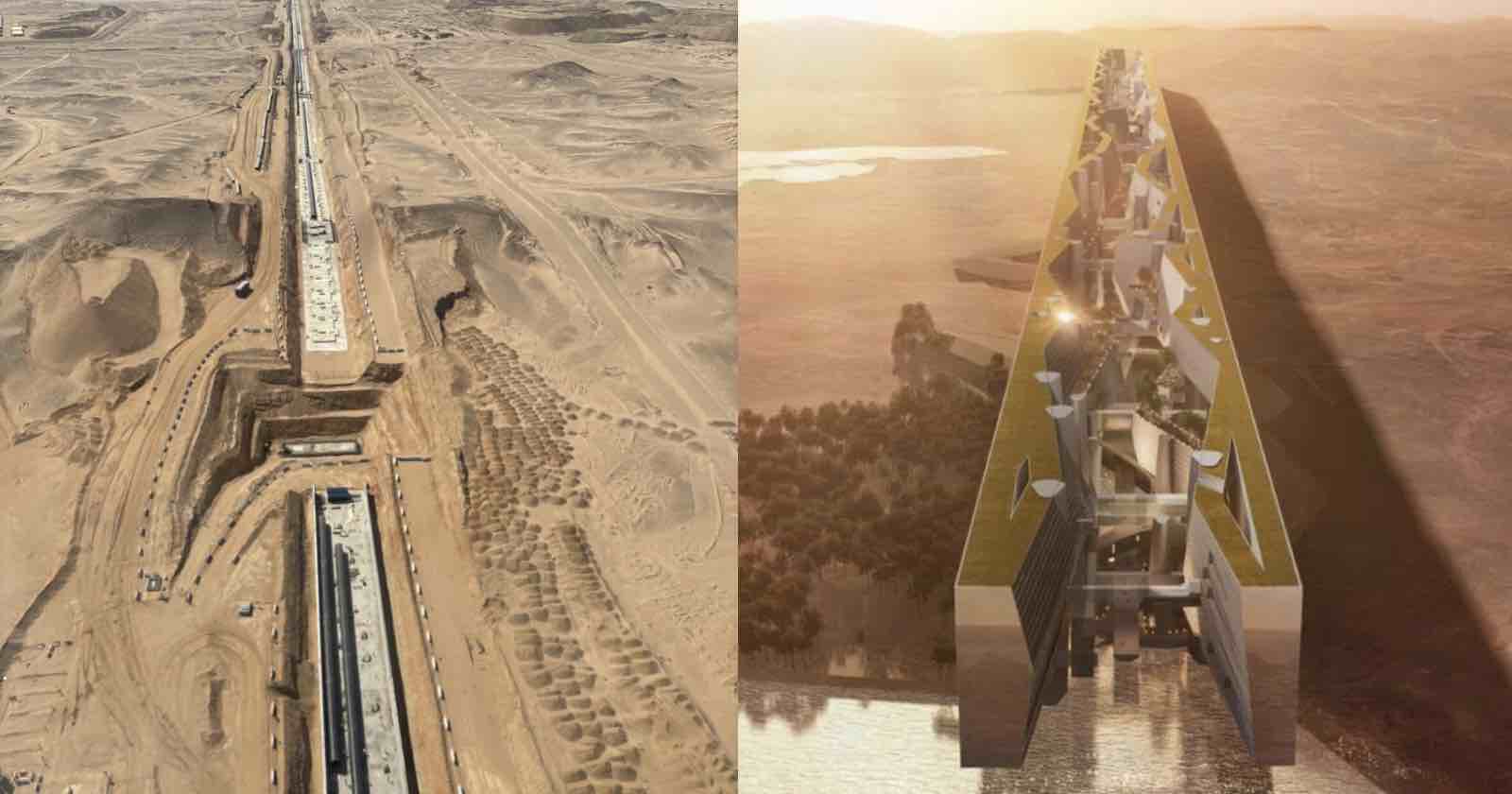
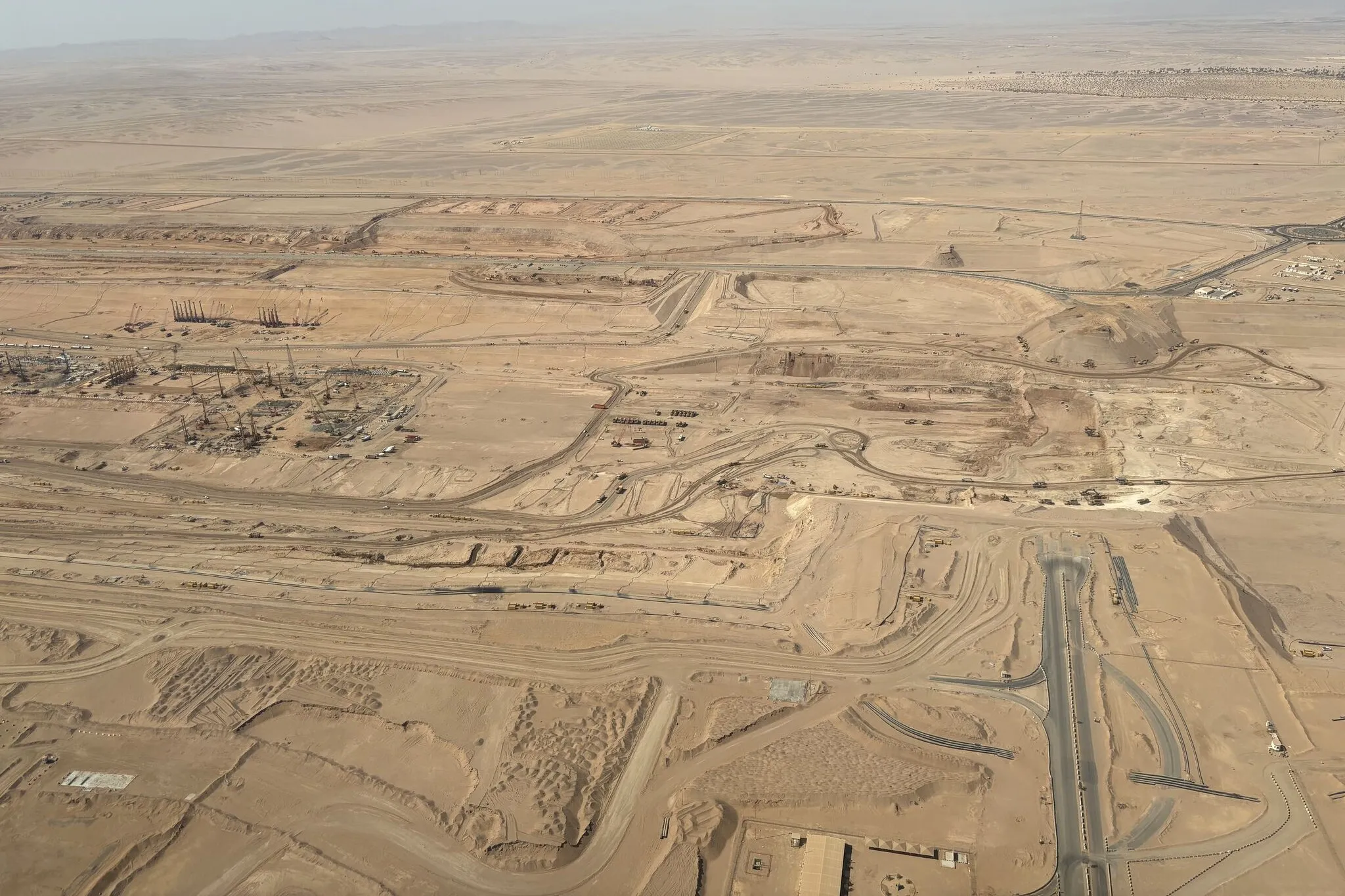
Construction began in earnest with massive excavation and the world’s largest piling operations. By mid-2025, aerial photos showed groundwork advancing, including infrastructure for a marina and stadium.
Milestones included:
- World’s largest piling rigs deployed.
- Focus on a initial 2.4-5 km segment.
- Modular builds and foundation work visible in drone footage.
However, progress slowed significantly by late 2025. Reports indicate limited vertical construction, with much effort concentrated on a small stretch. Some sources suggest suspension of broader work pending reviews.
Major Scaling Back: From 170 km Dream to Phased Reality
By December 2025, The Line has been dramatically reduced:
- Length: Focus on 2.4-5 km initially, down from 170 km.
- Population: ~300,000 residents by 2030 (vs. 1.5-9 million originally).
- Timeline: First phase possibly 2030-2045; full completion delayed to 2045 or later (some estimates 2080+).
- Costs: Ballooned to trillions; Saudi PIF wrote down billions, halted contracts in sections.
NEOM insists on “phased development” and strategic adjustments, denying abandonment. Priorities shifted to feasible elements like Trojena (ski resort) and Oxagon (port).

Controversies and Criticisms
The Line has faced intense scrutiny:
- Human Rights: Forced evictions of tribes, reports of violence and displacement.
- Environmental Concerns: Potential harm to ecosystems and migratory routes.
- Feasibility: Engineering challenges (wind loads, logistics), high surveillance risks, and doubts over livability in a linear structure.
- Financial and Management Issues: Internal audits revealed mismanagement; lack of private investment amid oil price fluctuations.
Critics call it a “mirage,” while supporters view it as a necessary bold experiment.
The Future of The Line: Laboratory for Tomorrow or Cautionary Tale?
As 2025 closes, The Line embodies Saudi ambition tempered by pragmatism. NEOM shifts toward AI, tourism, and tech, with The Line as a “multi-generational” project. Will it pioneer sustainable cities or become a symbol of overreach?
Despite setbacks, groundwork continues, hinting at eventual realization – albeit far from the original sci-fi vision.
World24 Analysis: The Line – Ambition, Pragmatism, and the Limits of Megaprojects in 2025
From a World24 perspective, The Line encapsulates the high-stakes gamble of post-oil diversification strategies in resource-rich autocracies. Launched as the crown jewel of Saudi Vision 2030, it was meant to signal a pivot toward innovation-driven growth, attracting global talent and investment while projecting soft power through futuristic urbanism. Yet the dramatic scaling back in 2025 reveals deeper structural challenges facing such mega-projects in an era of economic uncertainty and geopolitical realignment.
Financially:
The downsizing reflects Saudi Arabia’s constrained fiscal space. With oil prices volatile and the Public Investment Fund (PIF) facing write-downs amid lower-than-expected revenues, prioritizing trillion-dollar linear cities over more immediate returns (like AI hubs, tourism, or defense) became untenable. The shift to a 2.4–5 km initial phase underscores a pragmatic recalibration: NEOM is evolving from a singular spectacle into a portfolio of more feasible developments (Trojena, Oxagon, Sindalah), spreading risk and delivering quicker wins to sustain domestic and investor confidence.
Politically:
The Line highlights the tension between visionary leadership and execution in centralized systems. Crown Prince Mohammed bin Salman’s top-down approach enabled rapid announcement and initial mobilization but struggled with accountability, cost overruns, and international scrutiny over human rights and environmental issues. The lack of robust private-sector buy-in—foreign investment remains limited—exposes a core weakness: megaprojects marketed as global ventures often depend heavily on sovereign wealth, making them vulnerable to budgetary swings.
Globally:
The Line’s trajectory serves as a cautionary tale for similar initiatives (e.g., Indonesia’s Nusantara, Egypt’s New Administrative Capital). In a world shifting toward multipolar competition and climate urgency, extravagant greenfield cities risk being seen as vanity projects rather than practical solutions to urbanization. True sustainable urban innovation may lie more in retrofitting existing cities with smart tech and green infrastructure than building mirrored megastructures from scratch.
Looking ahead:
The Line is unlikely to be abandoned entirely—some version will persist as a symbol of ambition and a testing ground for modular construction and AI-urban integration. But its reduced scope signals the end of the “build it big and they will come” era. Success now hinges on delivering tangible, phased results to rebuild credibility. In 2025, The Line teaches that even the most audacious visions must bend to economic reality, governance constraints, and global skepticism. Saudi Arabia’s broader diversification push remains viable, but it will succeed through adaptability, not spectacle alone.
For the latest on The Line NEOM updates, construction progress, and Vision 2030 developments, stay tuned.